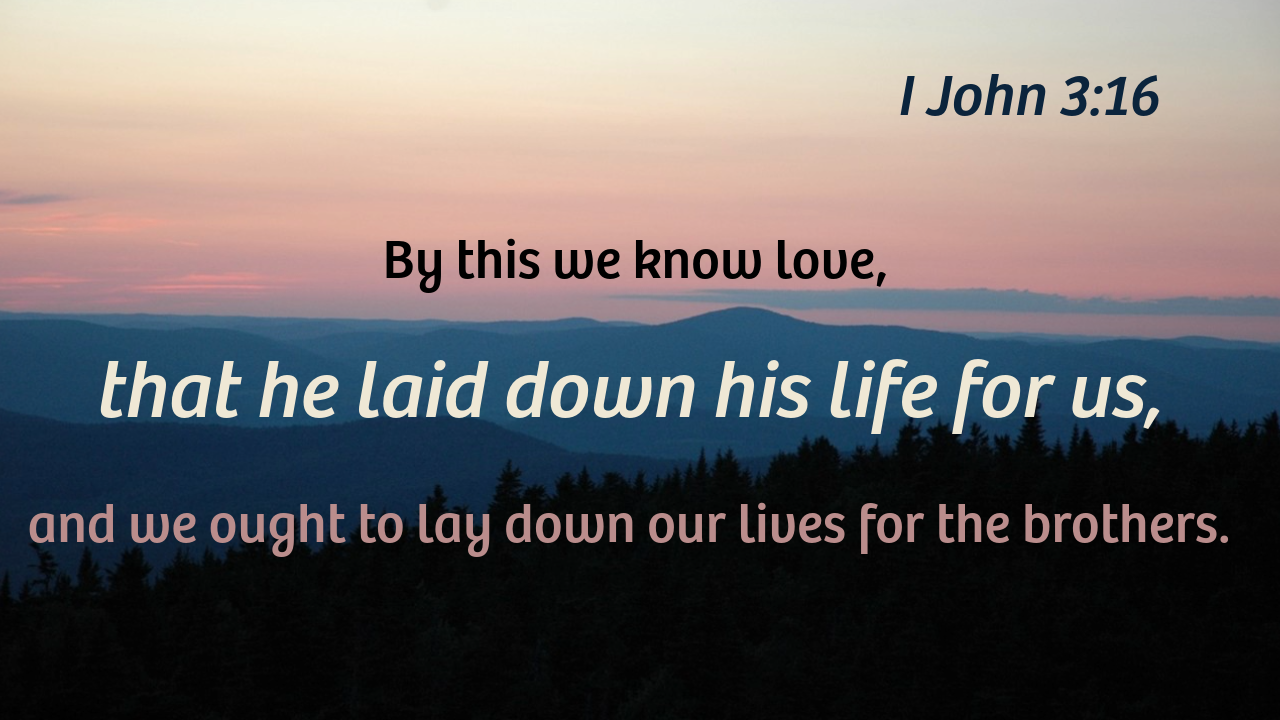
I John 3:16 By this we know love, that he laid down his life for us, and we ought to lay down our lives for the brothers.
What is love?
If we were to ask people this question at random, we might hear answers like: love is caring deeply about someone; love is feeling emotionally close, safe, or understood; or love is the feeling I experienced when I saw the birth of my firstborn.
These are all aspects of love, but none of them compare to the love defined in 1 John 3:16.
In English, we have one word for love, but in the original language of the New Testament—Greek—there are four different words that describe it.
First, there is eros. This is physical love or sexual desire. It is the type of love that involves passion, romance, or attraction.
Next is philia. This is the love of sincere friendship—a deep fondness and affection for another person. It is where we get the name Philadelphia, the city of brotherly love.
Then there is storge. This is familial love—the bond of affection and loyalty within a family between parents and children or between brothers and sisters.
Finally, there is agape, the highest form of love because it is the love of God. The only origin of agape is God Himself.
1 John 3:16 says, “This is how we know what love (agape) is: Jesus Christ laid down His life for us.”
We are born with a nature bent toward sin, constantly choosing ourselves instead of God. But God loved us first by sending His one and only Son to die in our place and to transform our hearts and lives. When we believe that Jesus died on the cross and rose from the dead, and we confess with our mouth that He is the Lord of our lives, we are born of the Spirit (Romans 10:9–10; John 3:3–6). God then gives us the capacity to love (agape) both Him and others through the new nature He imparts to us and through the power of the Holy Spirit.
God is love (agape) (1 John 4:16), and we can love because He first loved us (1 John 4:19). Our love is a reflection of our understanding of the Heavenly Father’s love for us. Every deeper revelation of His love is an invitation to imitate the love of our Heavenly Father (Ephesians 5:1).
1 John 3:16 teaches this same truth. We know love because Jesus laid down His life for us. Therefore, we ought to love others by laying down our lives for them. The word ought implies a process of growth. It acknowledges that we may not always love as God loves—not because we lack the ability, but because we can become momentarily distracted by the pull of selfishness in this sin-filled world.
We must understand that we have been transformed by the love of God. This transformation was accomplished at the cross and became a reality in our lives when we were born again. We now have access to the presence of God and can be continually captivated by His love. As this happens, the statement, “I ought to lay down my life for my brothers and sisters,” becomes, “I can’t help but lay down my life for my brothers and sisters,” because we are being transformed into the likeness of Jesus with ever-increasing glory.
Prayer:
Lord Jesus, may I always be captivated by Your demonstration of love for humanity and by Your daily demonstration of love for me. I am able to love because You first loved me. You gave me what I did not deserve. You forgave me, made me new, and empowered me by Your Holy Spirit to love others as You have loved me. Do whatever it takes to teach and discipline me to love the people You have placed in my life with the same love You have shown to me.
Dr. David John Philips

Share the cards with friends and family via text and social media: on a desktop, right click the image and select Save or Copy Image. On a mobile device, hold and either Copy or Save to photo roll; spread the Good News!